
Hassel Island St. Thomas: Forts, Ruins, Trails & Access
Hassel Island is a roughly 135-acre island in Charlotte Amalie Harbor, a short boat ride from the St. Thomas waterfront, and most of it belongs to Virgin Islands National Park. It holds the ruins of British-era forts and batteries and the Creque Marine Railway, which dates to the 1840s. There is no bridge, ferry or facility on the island, so you reach it by boat or kayak and bring everything you need.
Where Hassel Island Is
Hassel Island sits inside the harbor in front of Charlotte Amalie, just south of St. Thomas and east of Water Island. It is the smaller of the two islands in the harbor. It was once joined to St. Thomas by a narrow isthmus; Danish authorities cut a channel through it in the 1860s, in part to improve water circulation in the harbor, and the U.S. Army Corps of Engineers dredged the channel deeper in 1919.
The island was first called Hurricane Hole and later took the name of the Hassel family, who owned much of it. In 1978 Virgin Islands National Park expanded to include about 122 acres here. The park puts that at roughly 90% of the island; the territorial government and a few private homeowners hold the rest.
A Short History in Ruins
The National Park Service describes Hassel Island's past as military, commercial and agricultural, with activity running from the 1600s to the mid-1900s. Careening Cove appears on maps as early as 1687. Denmark used the island to help defend the harbor, British forces occupied it during the Napoleonic Wars, and the U.S. Navy ran a station here during both world wars. The Royal Mail Steam Packet Company used the island as a West Indies hub from about 1850, and the Hamburg America Line set up a coaling station in 1871. The island is listed on the National Register of Historic Places as a historic district.
What to See
Creque Marine Railway
On the northern tip of the island, at Careening Cove, are the remains of the Creque Marine Railway. Danish investors built it in the early 1840s, and it entered commercial service in 1844 to haul ships out of the water for hull cleaning and repair. Henry Creque bought it at auction in 1910 and refurbished it, the U.S. military used it during World War II, and it was abandoned in the 1960s. Moon Travel Guides calls it the earliest steam-powered marine railway in the Western Hemisphere, and Wikipedia describes it as probably the world's oldest surviving marine railway. The ruins have been cleared, and old machinery is on view.
Fort Willoughby and the Garrison House
Fort Willoughby stands at sea level on the island's eastern point, built on the site of the older Prince Frederik's Battery. Next to it is the Garrison House, which housed British soldiers during the Napoleonic Wars. The harbor views from here are a highlight.
Shipley's Battery
Shipley's Battery is one of three British batteries built on the island around 1801 to 1802. The National Park Service trail map shows Shipley's Battery Trail starting near the Creque Marine Railway and winding south to the battery.
Cowell's Battery and the Signal Station
Cowell's Battery and the Signal Station sit at the island's highest point, 267 feet above sea level, according to the St. Thomas Historical Trust. The signal station operated until the 1970s. Expect wide views over the harbor and Charlotte Amalie.
Trails on Hassel Island
A trail network links the historic sites. Besides Shipley's Battery Trail, the NPS map names the Officers' Quarters Trail and Cowell's Trail. The St. Thomas Historical Trust rates its guided hike as moderate, a 3 on a scale of 5, over uneven ground. Trail work has been an ongoing partnership between the park and the Trust, so check current conditions before you go.
How to Get to Hassel Island
- Guided tour. The St. Thomas Historical Trust describes its tour as the only guided tour of Hassel Island. Guests meet at the Trust's museum in Charlotte Amalie and travel to the island by boat for a walk of about 2.5 to 3 hours. Proceeds support the Trust. Check its website for the current schedule.
- Kayak. Hassel Island is a short paddle from Frenchtown, and VisitUSVI notes the crossing is usually calm. Some outfitters have offered guided kayak, hike and snorkel trips here; confirm a tour is running before you plan around it.
- Private boat. A captained charter can bring your group into the harbor and around the island on your own schedule. Our St. Thomas private boat charter guide explains how a private day works.
Park Rules to Know
- Day use only. The park's Superintendent's Compendium limits boats docking at Careening Cove or the Creque Marine Railway to day use and prohibits storing boats on the island.
- Limited landing spots. The same document notes that visitors have few places to safely reach the shore and hike, so plan your landing with your captain.
- Seabird nesting season. A 2023 notice from the Virgin Islands Department of Planning and Natural Resources (DPNR) lists "Hassel" among offshore cays that may be visited from April 1 to November 15 only with a free permit or for research. Because most of the island is national park land, check current rules with both the park and DPNR before going ashore.
- Leave history in place. Stay on the trails, do not climb on the ruins and leave no trace.
Rules can change, so check the current Virgin Islands National Park compendium before your visit.
Tips for Your Visit
- Wear sturdy walking shoes. The Historical Trust recommends them, along with plenty of water and sunscreen.
- Bring food and water. There are no facilities or services on the island.
- Use reef-safe sunscreen and keep phones in a waterproof bag for the landing.
- Start early. VisitUSVI suggests mornings for calmer water and cooler hiking.
- See our St. Thomas packing list for the rest.
Best Time to Visit
Hassel Island works any time the harbor is calm enough to land, and morning visits give you cooler temperatures for the uphill sections. If you want to go ashore between April and mid-November, check the seabird-season rules above first. A circle of the island by boat to see Fort Willoughby and the railway ruins from the water is an option any day.
Nearby Stops to Combine
- Buck Island and Turtle Cove, off the south side of St. Thomas, for turtles and a shipwreck. See our Buck Island snorkeling guide.
- Christmas Cove on Great St. James, off the east end, for calm-water snorkeling. Read the Christmas Cove guide.
- More ideas are in our roundup of day trips from St. Thomas.
Hassel Island FAQ
Is Hassel Island part of Virgin Islands National Park?
Mostly. The park acquired about 122 acres in 1978, roughly 90% of the island. A few parcels remain territorial or private.
Can you visit Hassel Island on your own?
Yes, by kayak or boat. There is no ferry or bridge. Boats at Careening Cove or the railway are limited to day use, and landing spots are limited, so check current park and DPNR rules first.
What is the Creque Marine Railway?
It is a ship-repair railway built in the 1840s at Careening Cove that hauled vessels out of the water until the 1960s. It is considered one of the oldest surviving marine railways.
How hard is the hike on Hassel Island?
The St. Thomas Historical Trust rates its guided hike as moderate, 3 out of 5, with uneven terrain. The climb to the Signal Station reaches 267 feet.
Are there restrooms or food on Hassel Island?
No. There are no facilities or services, so bring water, snacks and sun protection.
Visit by Private Boat
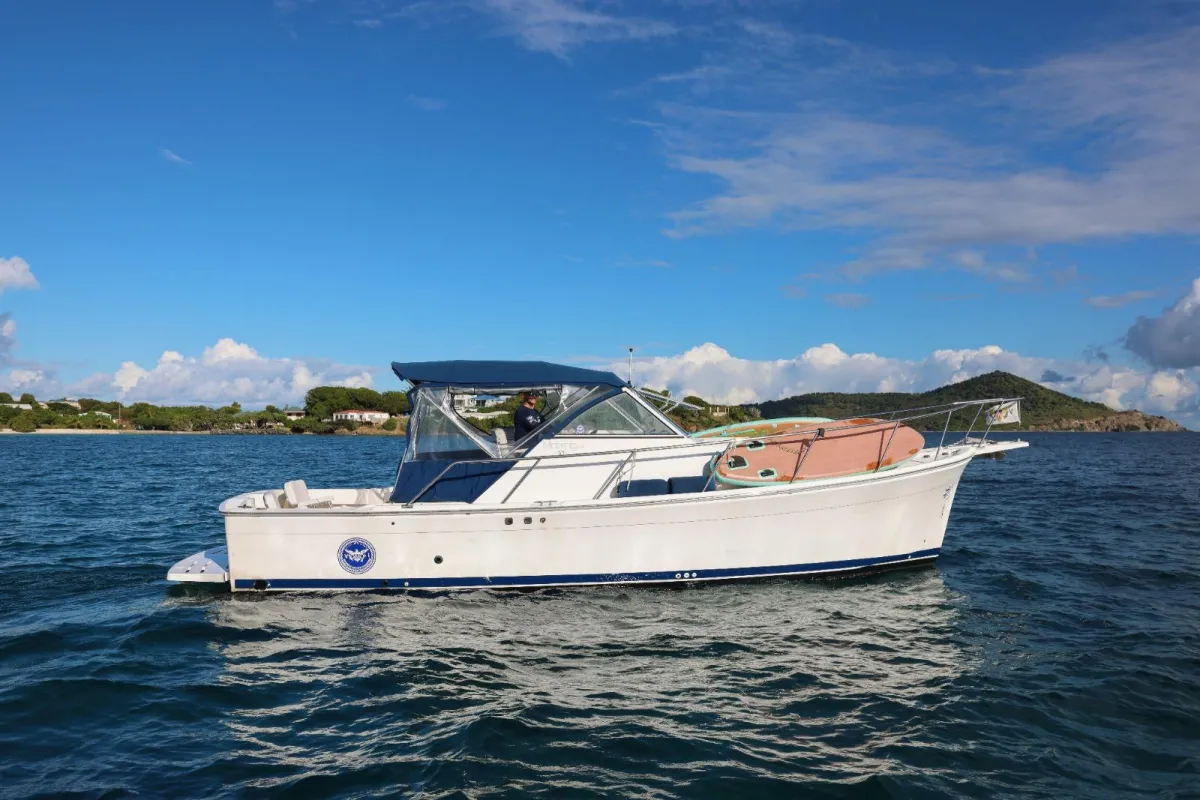
Phoenix Island Charters runs private, captained day charters, mostly from Sapphire Beach Resort & Marina on St. Thomas, with other pickups possible depending on the itinerary. There is no set itinerary, so your captain can plan a day around Charlotte Amalie Harbor, Hassel Island and snorkel stops. Half-day trips run 9:00 to 12:30 or 1:00 to 4:30, and full USVI days run 9:00 to 4:00. Compare the options on our charter options page or read about a half-day charter.
Every charter includes a USCG-licensed captain, safety gear, snorkel gear (masks, fins and sanitized snorkels), inflatable loungers, bottled water, a cooler with ice, a bathroom and shade. BYOB is welcome; lunch is not included. Groups of up to 6 can take Phoenix (Mainship Pilot 30, USVI only, fuel included), and larger groups can compare boats on our fleet page. Rates vary by boat, trip length and time of year.