Buck Island St. Thomas: Turtle Cove Snorkeling & Shipwreck
Buck Island off St. Thomas is a 45-acre island about 2 miles south of St. Thomas, protected as Buck Island National Wildlife Refuge by the U.S. Fish and Wildlife Service. The island itself is closed to public access, but the water around it is one of the island's best-known snorkel and dive areas, with sea turtles at Turtle Cove and the coral-covered wreck of the Cartanser Sr. nearby. You can only get there by boat.
Not to Be Confused with Buck Island Reef (St. Croix)
The U.S. Virgin Islands have two well-known Buck Islands, off two different islands and run by two different federal agencies:
- Buck Island National Wildlife Refuge (St. Thomas) is the subject of this guide. It is a small refuge island south of St. Thomas, managed by the U.S. Fish and Wildlife Service. Tour operators sometimes call it "Little Buck Island."
- Buck Island Reef National Monument (St. Croix) is a National Park Service site about 1.5 miles from St. Croix. It has hiking trails, an underwater snorkel trail through elkhorn coral, and concession boats from Christiansted and Green Cay Marina.
If you are staying on St. Thomas, the Buck Island you can reach on a day charter is the refuge. If a tour mentions an underwater snorkel trail and a departure from Christiansted, it is the St. Croix monument.
Where It Is and How to Get There
The refuge sits off the south side of St. Thomas, with the smaller Capella Island right next to it. There is no ferry, dock or public landing, so every visit happens from the water. You have three main options:
- Group snorkel tours. Catamaran and sailing tours run to Turtle Cove from St. Thomas and St. John, and some cruise-ship excursions pair Turtle Cove with a stop at the wreck in Shipwreck Cove.
- Dive trips. Certified divers can join boat dives that visit the Cartanser Sr. wreck and the reefs off Buck Island.
- A private charter. A captained boat lets you choose when to go, how long to snorkel and what to pair it with. See our St. Thomas private boat charter guide for how a private day works.
Snorkeling Turtle Cove
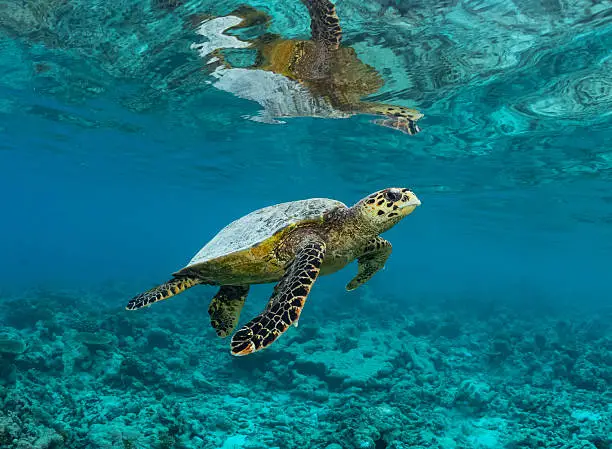
Turtle Cove is on the northwest side of Buck Island and is known for its sea turtles. Tour operators describe resident green sea turtles, along with rays, octopus and tropical fish. They also note that sightings are often reported but not guaranteed, and that the snorkel site can change with weather and sea conditions.
For what to look for once you are in the water, read the complete guide to sea turtles in St. Thomas.
Turtle etiquette
Sea turtles are protected wildlife. NOAA Fisheries asks snorkelers not to touch, chase or feed sea turtles and to give them plenty of room (its guideline is 50 yards). Sea turtles in U.S. waters are protected under the Endangered Species Act. Float calmly at a distance, let turtles come up for air without crowding them, and keep fins off the sea grass and coral.
The Cartanser Sr. Shipwreck
Off Buck Island, in an area called Shipwreck Cove, lies the wreck of the Cartanser Sr. (also spelled Cartanser Senior or Cartanza Señora). Frommer's describes it as a World War II cargo ship that is now encrusted with coral and home to many reef fish. One dive excursion describes a 90-foot vessel that later carried goods between islands before it was abandoned; other accounts of its history differ in the details.
The wreck lies in roughly 35 to 50 feet of water (sources differ, and Hurricane Hugo broke it into sections), so it is mainly a scuba site. Some snorkel tours do stop at Shipwreck Cove, where the wreck draws tropical fish; how much of the hull you can make out from the surface depends on the day's visibility.
Wreck dives require a certified dive operator. Phoenix Island Charters' listed inclusions cover snorkel gear, not scuba, so plan the wreck as a snorkel look from above unless you have arranged diving separately.
Refuge Rules
The U.S. Fish and Wildlife Service states that Buck Island National Wildlife Refuge is closed to public access. In practice that means:
- Do not go ashore. Enjoy the island from the water.
- Leave wildlife alone. The refuge was transferred to the Fish and Wildlife Service for its value to migratory birds.
- Protect the reef. Do not stand on or touch coral, and use reef-safe sunscreen.
- Check current rules. Contact the Caribbean Islands National Wildlife Refuge Complex, which manages the refuge, for the latest regulations before your trip.
The island also holds a historic lighthouse site on its northeast corner. The Danish lighthouse there was built in 1913, before Denmark transferred the islands to the United States in 1917.
Tips for Your Visit
- Pack reef-safe sunscreen, a rash guard and a hat. See our St. Thomas packing list.
- Bring food. There is nothing to buy at the island, and lunch is not included on private charters.
- Stay near your boat and follow your captain's directions on where to enter the water and where other boats are moving.
- Let your captain choose the timing. Group tours visit Turtle Cove too, and a private boat can adjust around them.
Best Time to Visit
Tour operators describe the turtles at Turtle Cove as residents, but sea conditions decide whether it is a good stop on a given day. Even group tours note that their snorkel site can change with weather and sea conditions. On a private charter, your captain can check the forecast and swap the order of stops to get you the calmest water.
Nearby Stops to Combine
- Christmas Cove on Great St. James, off the east end, for more turtles and the Pizza Pi floating pizzeria.
- St. John's north shore, including Honeymoon Bay, for a beach stop after snorkeling.
- More reefs around the island, covered in our St. Thomas snorkeling guide and our guide to coral reefs of St. Thomas.
Buck Island St. Thomas FAQ
Is Buck Island St. Thomas the same as Buck Island Reef in St. Croix?
No. Buck Island off St. Thomas is a U.S. Fish and Wildlife Service refuge. Buck Island Reef National Monument is a National Park Service site off St. Croix, with its own snorkel trail and concession boats.
Can you go ashore on Buck Island St. Thomas?
No. The U.S. Fish and Wildlife Service lists the refuge as closed to public access. Snorkeling and diving take place in the surrounding water.
Will I see sea turtles at Turtle Cove?
Green sea turtle sightings are often reported, but the turtles are wild and sightings are not guaranteed.
Can you snorkel the Cartanser Sr. wreck?
The wreck lies roughly 35 to 50 feet down (sources differ), so it is mainly a scuba dive. Some snorkel tours stop at Shipwreck Cove, and what you can see from the surface depends on visibility.
How do I get to Buck Island from St. Thomas?
Only by boat: a group snorkel tour, a dive trip or a private charter. There is no ferry or public dock.
Visit by Private Boat
Phoenix Island Charters runs private, captained day charters, mostly from Sapphire Beach Resort & Marina on St. Thomas. There is no set itinerary, so your captain can plan around Turtle Cove, the wreck and other snorkel stops. Half-day trips run 9:00 to 12:30 or 1:00 to 4:30, and full USVI days run 9:00 to 4:00.
Every charter includes a USCG-licensed captain, safety gear, snorkel gear (masks, fins and sanitized snorkels), inflatable loungers, bottled water, a cooler with ice, a bathroom and shade. BYOB is welcome; lunch is not included. Groups of up to 6 can take Phoenix (Mainship Pilot 30, USVI only, fuel included), and larger groups can compare boats on our fleet page.
Check availability and book your Buck Island snorkel charter.