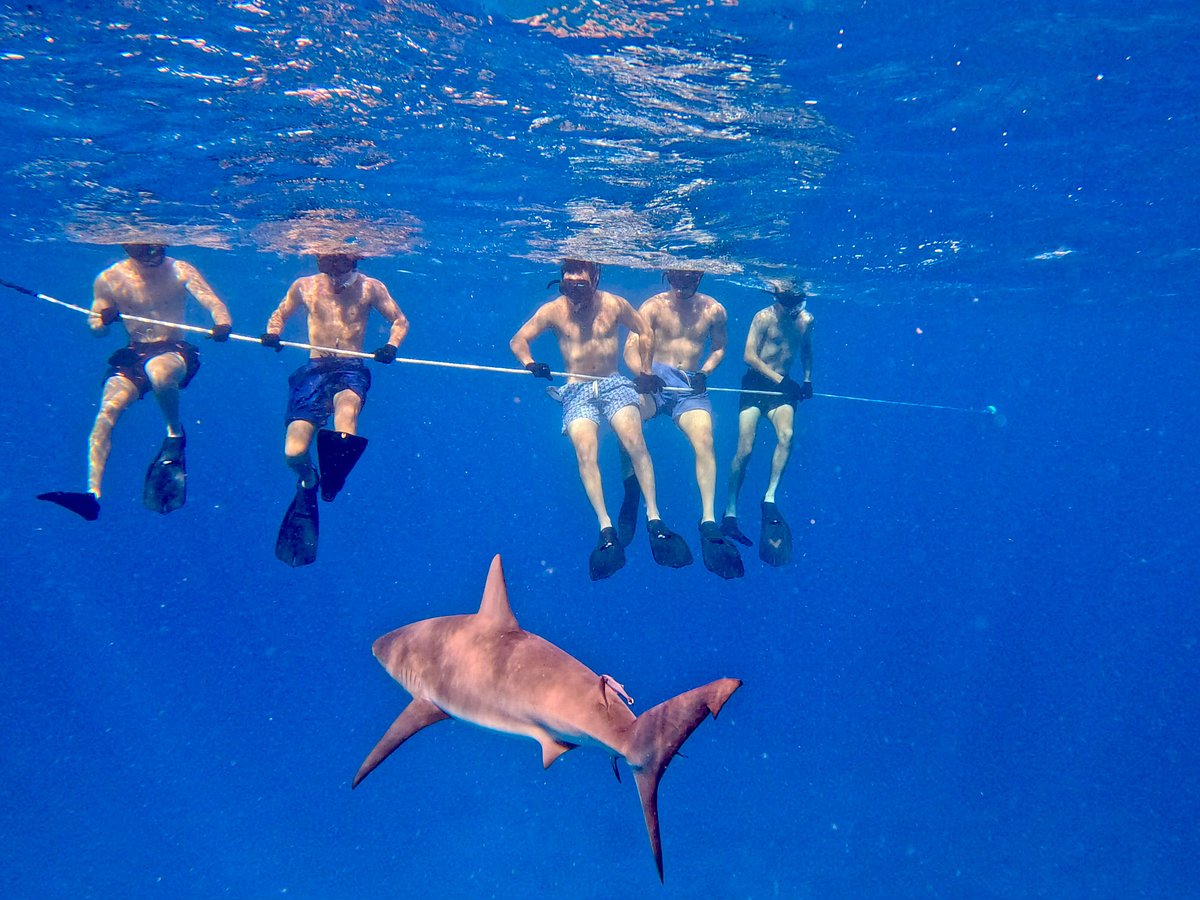
Sharks & Rays of St. Thomas: Everything You Need to Know Before You Get in the Water
Sharks & Rays of St. Thomas: Everything You Need to Know Before You Get in the Water
A Complete Guide to the Sharks and Rays You'll Find Around St. Thomas, Including Where They're Found, How They Behave, and Why There's Little Reason to Fear Them
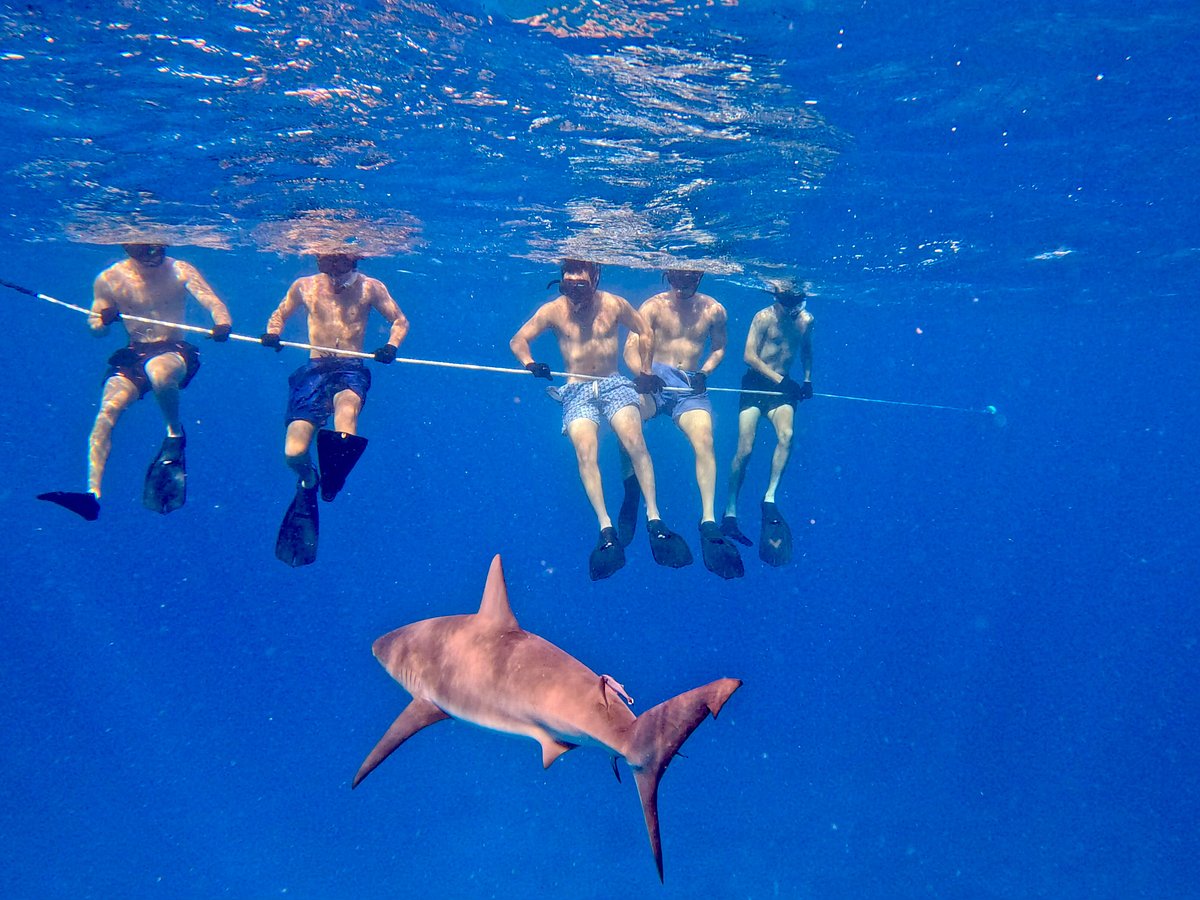
Introduction
Few marine animals inspire as much fascination, and as many misconceptions, as sharks and rays.
For many first-time visitors to St. Thomas, one of the first questions asked before snorkeling is:
"Are there sharks here?"
The answer is yes.
However, the more important question is:
"Should I be worried?"
For the overwhelming majority of visitors, the answer is no.
The waters surrounding St. Thomas are home to several shark and ray species that play an important role in maintaining healthy marine ecosystems. Most are shy, avoid people, and spend their lives hunting fish, crustaceans, squid, and other marine prey. In fact, many experienced snorkelers and divers consider seeing a shark or eagle ray to be one of the highlights of their trip.
Understanding these remarkable animals not only makes snorkeling less intimidating—it helps visitors appreciate why healthy predators are essential to the Caribbean's underwater ecosystems.
Why Sharks Matter
Sharks are apex predators.
That means they help regulate marine ecosystems by removing weak, sick, and injured animals while keeping fish populations balanced.
Without sharks:
Certain fish populations can grow unchecked.
Reef ecosystems become less balanced.
Biodiversity can decline.
Food chains become unstable.
Healthy reefs almost always have healthy predators.
The presence of sharks is often a sign of a functioning marine ecosystem.
Shark Species Found Around St. Thomas
Although more than a dozen shark species may occasionally pass through Virgin Islands waters, only a handful are regularly encountered by divers and fishermen.
The Most Common Shark Visitors Might See
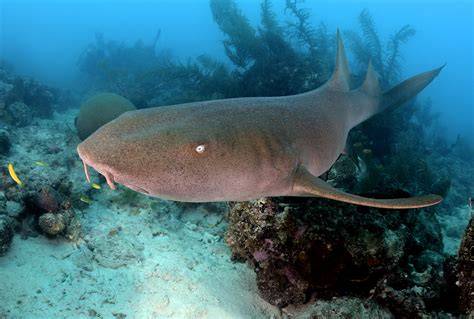
The Nurse Shark is responsible for most recreational shark sightings around St. Thomas.
Fortunately, it's also one of the calmest shark species in the Caribbean.
Identification
Yellow-brown body
Rounded head
Small eyes
Two barbels beneath the nose
Broad, muscular body
Average Size
6–9 feet
Habitat
Coral reefs
Sandy bottoms
Under ledges
Shallow caves
Seagrass beds
Behavior
Unlike many sharks, nurse sharks spend much of the day resting motionless beneath reefs or tucked beneath rocky overhangs.
They're most active at night.
Diet
Lobsters
Crabs
Octopus
Squid
Small fish
Are They Dangerous?
Nurse sharks are generally considered one of the least aggressive shark species.
Most incidents occur only when animals are harassed or handled.
Caribbean Reef Shark
The Caribbean's Signature Reef Predator
This is the species many scuba divers hope to see.
Identification
Gray upper body
White underside
Streamlined shape
Rounded snout
Size
5–8 feet
Habitat
Offshore reefs
Reef drop-offs
Deeper water
Unlike nurse sharks, Caribbean reef sharks spend much more time actively swimming.
They're naturally curious but generally keep their distance from people.
Blacktip Shark
Occasionally seen around the Virgin Islands.
Identification
Black markings on the tips of the fins
Slender body
Fast swimmer
Often found in:
Coastal waters
Sandy bays
Near reef edges
Lemon Shark
Although uncommon around St. Thomas itself, lemon sharks inhabit parts of the Caribbean.
Identification
Yellow-brown coloration
Broad head
Thick body
Juveniles often use mangroves as nursery habitat.
Great Hammerhead (Rare)
One of the ocean's most recognizable sharks.
Sightings around St. Thomas are uncommon but possible in deeper offshore waters.
Their wide hammer-shaped head helps them locate prey hidden beneath the sand using specialized sensory organs.
Rays of St. Thomas
Unlike sharks, rays spend much of their time gliding across the seafloor.
Watching one "fly" through the water is one of the Caribbean's most memorable underwater experiences.
Southern Stingray
The ray snorkelers are most likely to encounter.
Identification
Diamond-shaped body
Long whip-like tail
Brown upper surface
White underside
Habitat
Sandy flats
Seagrass meadows
Calm bays
Diet
Clams
Worms
Small crustaceans
Southern stingrays often bury themselves beneath the sand, leaving only their eyes visible.
Spotted Eagle Ray
Many divers consider this the most beautiful ray in the Caribbean.
Identification
White spots covering a dark body
Long tail
Graceful wing-like movements
Size
Wingspan up to 10 feet.
Unlike stingrays, eagle rays spend much more time swimming through open water.
Seeing one is often considered a lucky encounter.
Yellow Stingray
A much smaller species.
Usually well camouflaged against sandy bottoms.
Easy to overlook.
How Safe Is It to Swim Around Sharks?
For most visitors, sharks pose an extremely low risk.
The species commonly found around St. Thomas are naturally cautious around humans.
Millions of people snorkel, dive, and swim throughout the Caribbean every year without encountering any problems.
The best approach is simple:
Observe.
Respect.
Enjoy.
How to Stay Safe Around Sharks
Fortunately, staying safe requires very little effort.
Do
Remain calm.
Observe from a distance.
Continue swimming normally.
Follow local advice.
Don't
Chase sharks.
Corner them.
Feed them.
Touch them.
Spear fish nearby while snorkeling.
How to Stay Safe Around Rays
Stingrays are peaceful animals.
The greatest risk comes from accidentally stepping on one hidden beneath the sand.
To reduce the chance:
The Stingray Shuffle
Instead of taking large steps,
Shuffle your feet gently across the sand.
If a stingray is buried nearby, it will usually swim away long before you reach it.
Why Do Sharks Rarely Attack People?
Humans simply aren't natural prey.
Most shark species around St. Thomas feed on:
Fish
Rays
Squid
Lobsters
Crabs
Octopus
People don't resemble their normal food.
Most sharks avoid us entirely.
Fascinating Shark Facts
Sharks have existed for more than 400 million years, making them older than dinosaurs.
Some sharks can detect tiny electrical signals produced by other animals.
Nurse sharks can remain nearly motionless for long periods while resting.
Sharks continually replace lost teeth throughout their lives.
Not all sharks must keep swimming to breathe—nurse sharks can pump water over their gills while resting.
Fascinating Ray Facts
Rays are closely related to sharks.
Their "wings" are actually enlarged pectoral fins.
Eagle rays can leap completely out of the water.
Stingrays have excellent camouflage.
Most rays avoid conflict whenever possible.
Common Myths
"Every shark is dangerous."
False.
Most shark species are harmless to people.
"If you see one shark, there are dozens nearby."
Usually false.
Many reef sharks hunt alone.
"Stingrays attack swimmers."
No.
Almost every stingray injury occurs when one is accidentally stepped on.
"Sharks are mindless killing machines."
Absolutely not.
They are intelligent predators that play an essential ecological role.
Frequently Asked Questions
Are there sharks around St. Thomas?
Yes.
Several shark species live in Virgin Islands waters, although sightings by casual snorkelers are uncommon.
Is it safe to snorkel?
Yes.
Popular snorkeling beaches are enjoyed by thousands of visitors every year.
What should I do if I see a shark?
Remain calm.
Observe from a respectful distance.
Continue enjoying your experience.
Can stingrays sting you?
Only if they feel threatened, usually after being stepped on.
Shuffling your feet greatly reduces the chance of an accidental encounter.
Which is more common: sharks or rays?
Snorkelers are generally much more likely to encounter stingrays than sharks in shallow water.
Continue Exploring
Learn more about St. Thomas' incredible underwater world:
Complete Marine Life Guide
Coral Reefs of St. Thomas
Sea Turtles of St. Thomas
Tropical Fish of St. Thomas
Best Snorkeling Spots in St. Thomas
Reef Conservation Guide
Final Thoughts
Sharks and rays have patrolled the Caribbean long before people arrived on these shores. They are not villains of the sea but essential caretakers of one of the world's most diverse marine ecosystems.
For many visitors, spotting a nurse shark resting beneath a coral ledge or watching a spotted eagle ray soar effortlessly across the seafloor becomes one of the most unforgettable moments of their vacation. These encounters aren't reminders to fear the ocean—they're reminders of how healthy, vibrant, and wild the waters around St. Thomas still are.
Approach every encounter with curiosity and respect, and you'll leave with a deeper appreciation for the remarkable predators that help keep the Caribbean's reefs thriving.