Coral Reefs of St. Thomas: A Complete Guide to the Caribbean's Living Rainforests
Excellent. The next logical article is the one that explains the foundation of the entire underwater ecosystem. Most visitors snorkel over coral without realizing they're looking at living animals that have been building reefs for centuries.
This is exactly the kind of educational content that separates Phoenix from a typical travel website.
Coral Reefs of St. Thomas: A Complete Guide to the Caribbean's Living Rainforests
Everything You Need to Know About the Beautiful, Fragile, and Fascinating Coral Reefs That Make St. Thomas One of the Caribbean's Best Snorkeling Destinations
Introduction
Few places capture the imagination quite like a Caribbean coral reef.
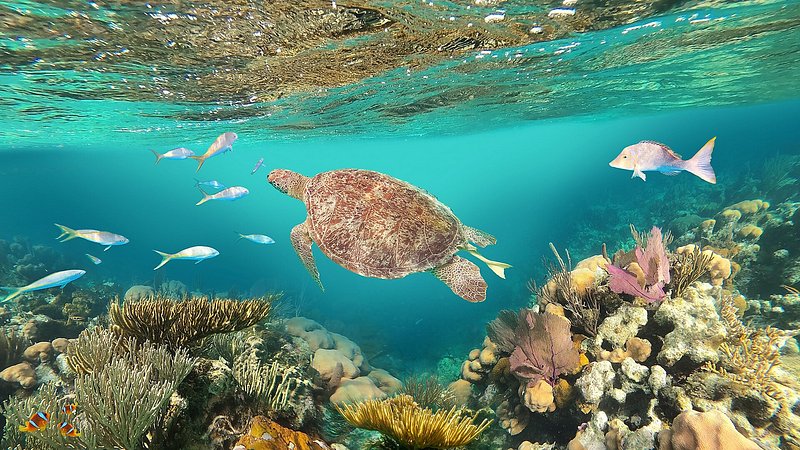
Slip beneath the surface in St. Thomas, and you'll find yourself surrounded by a vibrant underwater landscape unlike anything on land. Towering coral formations, colorful sea fans swaying with the current, schools of tropical fish darting between rocky crevices, and sea turtles grazing nearby all depend on one remarkable ecosystem: the coral reef.
Despite their appearance, coral reefs aren't made of rocks or plants. They are living communities built by tiny animals called coral polyps, working together over hundreds—and in many cases, thousands—of years. These reefs support an extraordinary variety of marine life while protecting shorelines from storms, improving water quality, and creating the underwater experiences that draw visitors from around the world.
Whether you're snorkeling from a beach, diving a reef wall, or exploring hidden coves by boat, understanding coral reefs will transform the way you experience the waters around St. Thomas.
What Is Coral?
One of the biggest misconceptions among visitors is that coral is either a rock or a plant.
In reality, coral is a living animal.
Each coral colony is made up of thousands of tiny organisms called polyps. These soft-bodied animals secrete calcium carbonate, slowly building the hard skeletons that form reefs over generations.
Although each individual polyp is tiny, together they create massive reef systems that can stretch for miles and provide habitat for countless marine species.
Coral survives through a remarkable partnership with microscopic algae called zooxanthellae. These algae live inside coral tissue, producing food through photosynthesis while giving many corals their vibrant colors. In return, the coral provides the algae with shelter and nutrients.
This relationship is one of the most important examples of symbiosis in nature.
Why Coral Reefs Matter
Coral reefs cover less than one percent of the ocean floor, yet they support roughly a quarter of all known marine species at some point in their life cycle.
Around St. Thomas, reefs provide benefits that extend far beyond snorkeling and diving.
Healthy coral reefs:
Provide food and shelter for hundreds of fish species.
Protect beaches by reducing wave energy during storms.
Support sea turtles, lobsters, octopuses, and countless invertebrates.
Improve water clarity by stabilizing the marine environment.
Contribute significantly to tourism and the local economy.
Help sustain recreational and commercial fisheries.
Without healthy reefs, many of the experiences that make St. Thomas special simply wouldn't exist.
The Different Types of Coral You'll See
Brain Coral
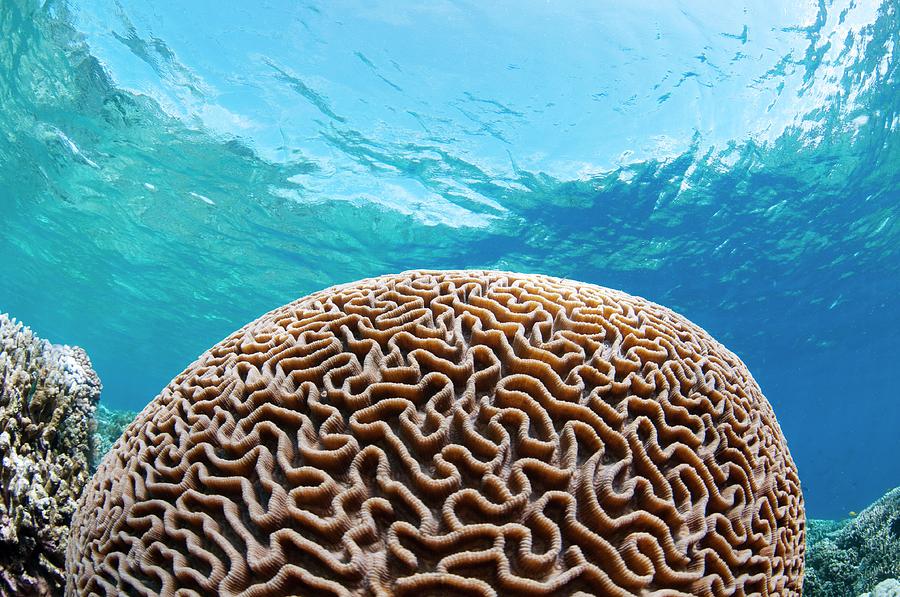
Brain coral is one of the easiest species to recognize.
Its surface is covered with winding grooves that resemble the folds of a human brain.
Appearance
Large rounded colonies
Green, brown, or yellow
Maze-like surface
Lifespan
Some colonies are believed to be several hundred years old.
Where You'll Find It
Protected reefs
Moderate depths
Calm bays
Elkhorn Coral
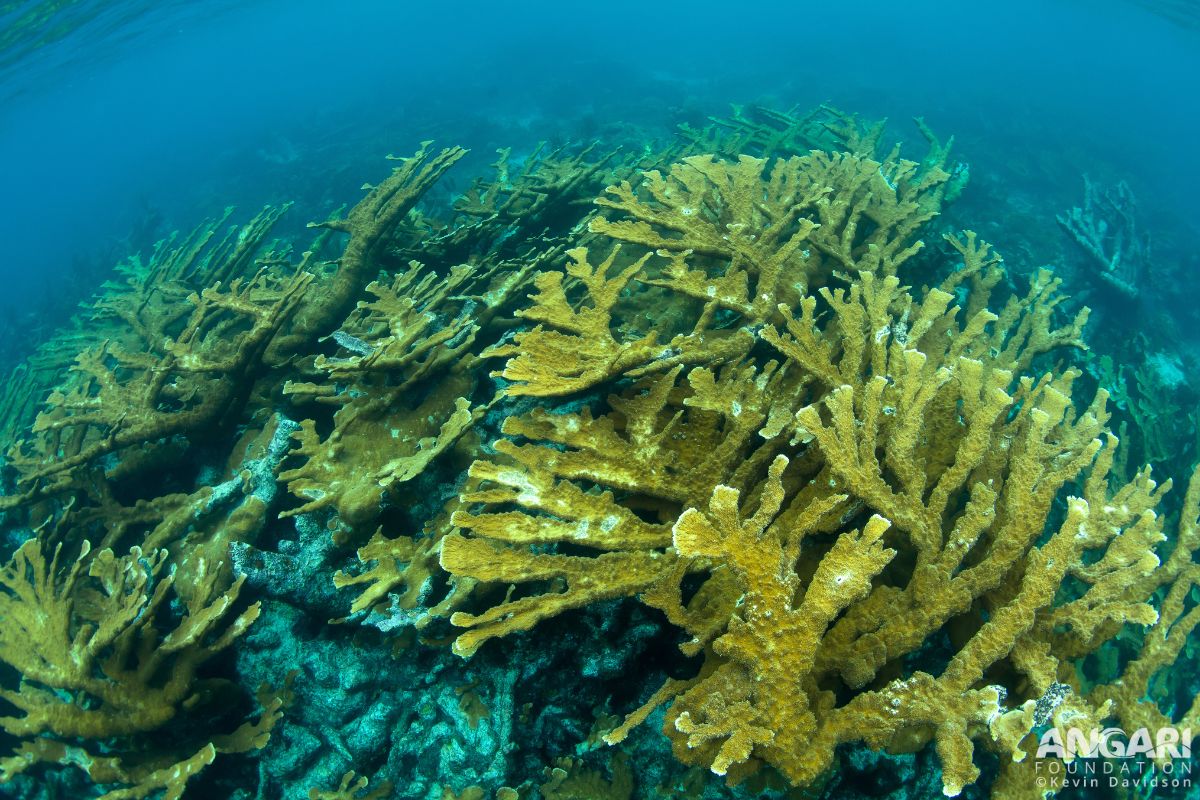
Named for its resemblance to elk antlers, this species was once one of the dominant reef builders throughout the Caribbean.
Appearance
Thick branching structure
Golden brown coloration
Broad flattened branches
Importance
Elkhorn coral helps reduce wave energy before it reaches beaches, making it an important natural barrier during storms.
Unfortunately, populations have declined dramatically due to disease, hurricanes, and warming ocean temperatures.
Staghorn Coral
Closely related to elkhorn coral but much more delicate.
Appearance
Thin antler-like branches
Dense thickets
Fast-growing colonies
Staghorn coral provides excellent shelter for juvenile fish.
Star Coral
Star coral forms large boulder-like colonies covered with thousands of tiny star-shaped polyps.
These corals are among the most common reef builders throughout the Virgin Islands.
Pillar Coral
Unlike most corals, pillar coral grows vertically instead of spreading outward.
Its tall columns can resemble underwater chimneys rising from the reef.
Soft Corals
Unlike hard corals, soft corals don't build limestone skeletons.
Instead, they sway gracefully with the movement of the water.
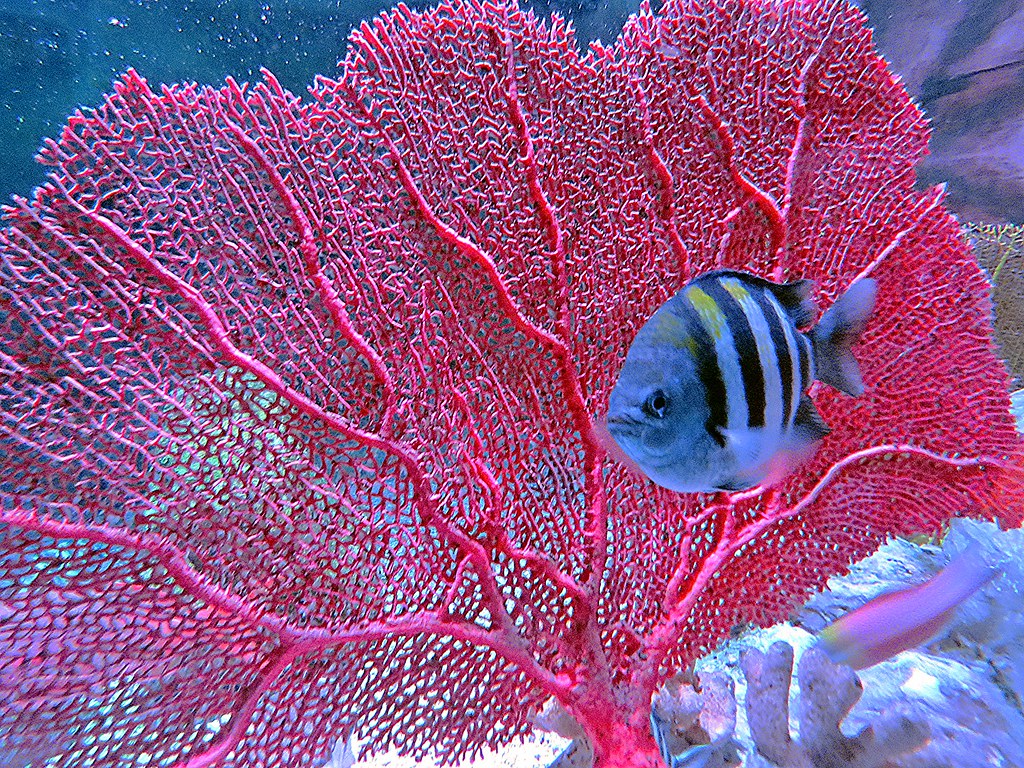
Sea Fans
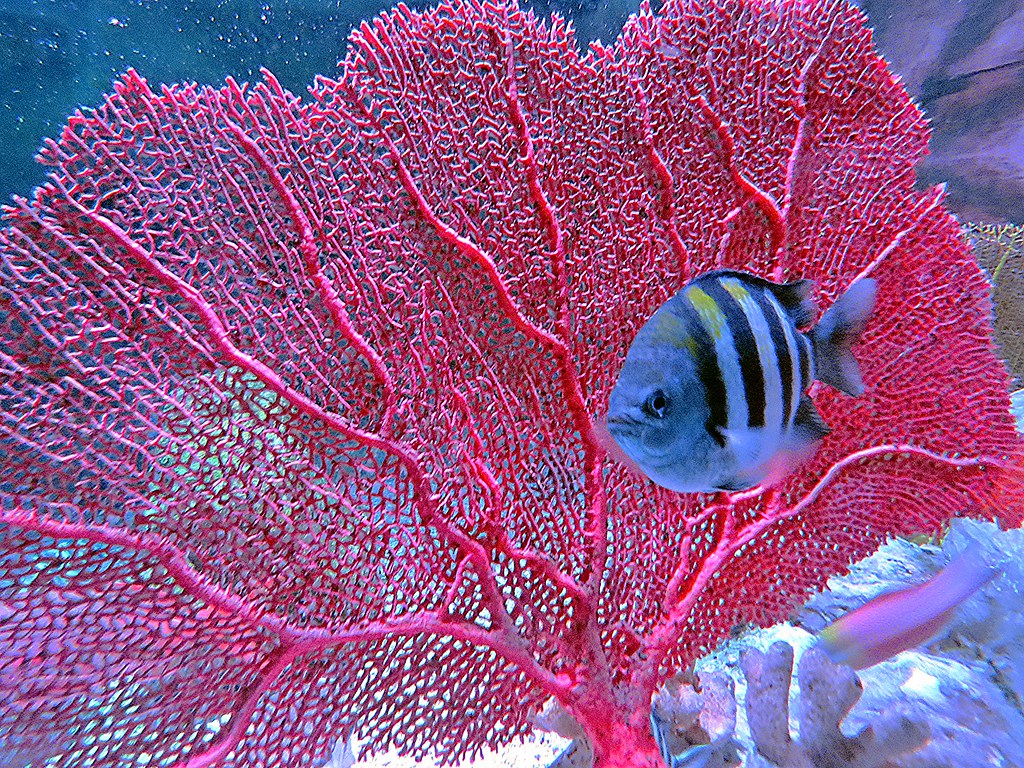
Among the most photographed marine organisms in St. Thomas.
Appearance
Purple
Yellow
Orange
Large fan-shaped colonies
Sea fans position themselves to capture plankton carried by ocean currents.
Sea Whips
Long, flexible colonies that bend with waves and currents.
Often overlooked until you notice them moving rhythmically underwater.
Sponges: The Reef's Silent Filters
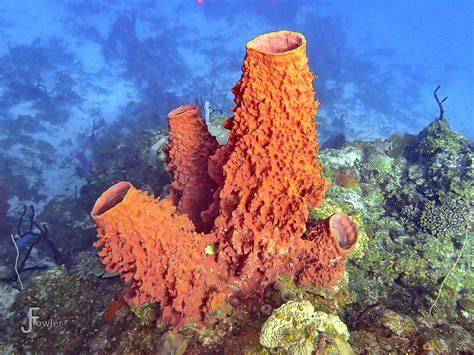
Although many visitors mistake them for coral, sponges belong to an entirely different group of animals.
Common species include:
Barrel Sponges
Rope Sponges
Tube Sponges
Vase Sponges
Sponges continuously filter seawater, removing tiny food particles and helping maintain healthy reef ecosystems.
Some species can filter thousands of gallons of water every day.
The Animals That Depend on Coral
Healthy reefs support an incredible variety of wildlife.
Visitors may encounter:
Blue Tangs
Queen Angelfish
Butterflyfish
Sergeant Majors
Parrotfish
Moray Eels
Octopus
Lobsters
Sea Turtles
Rays
Reef Sharks
Each species fills a unique role in maintaining the balance of the ecosystem.
Coral Bleaching
One of the greatest threats facing coral reefs is coral bleaching.
When water temperatures remain unusually warm for extended periods, stressed corals may expel the algae living inside their tissues.
Without these algae:
Coral loses its color.
Coral loses much of its food source.
Coral becomes more vulnerable to disease.
Prolonged stress can lead to coral death.
Bleaching doesn't always mean a coral is dead, but repeated or prolonged events make recovery more difficult.
Other Threats to Coral Reefs
Coral reefs also face pressure from:
Strong hurricanes
Disease outbreaks
Poor water quality
Sediment runoff
Physical damage from anchors
Standing or walking on coral
Unsustainable fishing practices
Invasive species
Fortunately, reef restoration projects and marine protected areas throughout the Virgin Islands are helping improve reef resilience.
How You Can Help Protect the Reef
Every visitor can make a positive impact.
Always:
Wear reef-safe sunscreen.
Maintain good buoyancy while snorkeling or diving.
Keep your fins away from coral.
Leave shells and marine life where you find them.
Dispose of trash properly.
Respect marine protected areas.
Never:
Stand on coral.
Break off pieces as souvenirs.
Feed reef fish.
Touch sea fans or other marine life.
Drop anchors on coral reefs.
Even a brief touch can damage coral that has taken decades to grow.
Where to See Healthy Coral Reefs
Some of the island's best coral formations can be found in protected bays, offshore reefs, and around neighboring islands.
Look for areas with:
Clear water
Rocky shorelines
Minimal wave action
Established snorkeling sites
Many of the healthiest reefs are easiest to access by boat, allowing visitors to reach locations away from the busiest beaches.
Fascinating Coral Facts
Some coral colonies in the Caribbean are older than many historic buildings on St. Thomas.
Hard corals grow slowly, often just a few millimeters to several centimeters each year depending on the species.
Coral reefs naturally protect coastlines by absorbing wave energy before it reaches shore.
Sea fans are actually colonies of tiny individual animals working together.
Healthy coral reefs are among the most biologically diverse ecosystems on Earth.
Frequently Asked Questions
Is coral alive?
Yes. Coral is made up of thousands of tiny living animals called polyps.
Can coral recover after bleaching?
Sometimes. If stressful conditions improve quickly, some corals can regain their symbiotic algae and recover.
Why can't I stand on coral?
Coral skeletons may appear hard, but the living tissue covering them is fragile. A single step can destroy years of growth.
Is dead coral okay to take home?
Leave all coral where you find it. Coral plays an important role in the reef ecosystem, and removing it may be restricted in protected areas.
Why do coral reefs have so many fish?
Reefs provide food, shelter, breeding areas, and protection from predators, making them one of the richest habitats in the ocean.
Continue Exploring
Continue your journey through St. Thomas' underwater world:
The Complete Guide to Marine Life in St. Thomas
Tropical Fish of St. Thomas
Sea Turtles of St. Thomas
Sharks & Rays of St. Thomas
Best Snorkeling Spots in St. Thomas
Reef Conservation Guide
Final Thoughts
Coral reefs are the heartbeat of the Caribbean. Every sea turtle gliding through a seagrass meadow, every school of tropical fish weaving between colorful corals, and every unforgettable snorkeling adventure begins with these remarkable living structures.
When you explore the reefs around St. Thomas, you're not simply swimming over beautiful scenery—you're visiting an ecosystem that has been growing for centuries and continues to support life above and below the surface. Understanding how reefs work makes every dive, snorkel, and boat excursion more meaningful, while reminding us why protecting these underwater treasures is essential for future generations.